Review & Free Watch Movie Online

Saturday, 26 September 2015

Steve Jobs: The Man In The Machine (2015) Watch Online

with 0 Comment
Perhaps one of the most unfortunate but inevitable reactions to Alex Gibney’s “Steve Jobs: The Man in the Machine” would be that it’s a “takedown” of the Apple co-founder. It’s not. Surely, the film subjects Jobs’ cult of personality to such severe scrutiny that it goes a long way toward dismantling it. But that’s part of a complex portrait that gives as much weight to Jobs’ world-changing talents as to his personal flaws.
In contrast to most of Gibney’s documentaries, which are told in a standard third-person style, usually without narration, this one has a more personal tone from the outset, as a way of recognizing and probing the reality that, more than any other figure, Jobs put the “personal” in personal computer and the many, increasingly intimate devices descended from it. As one interviewee puts it, he created machines that “felt like an extension of the self.”

Steve Jobs: The Man In The Machine (2015) Watch Online
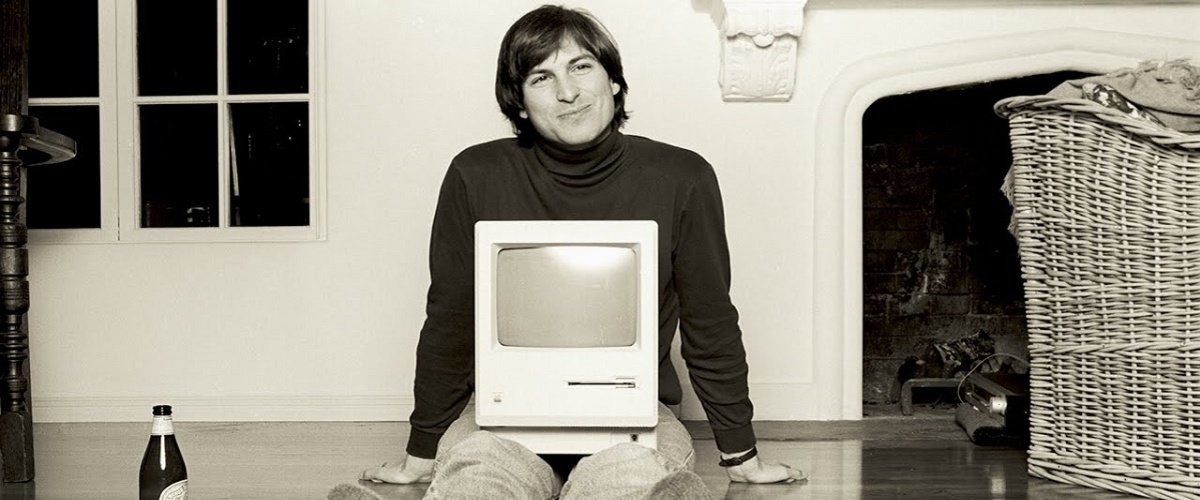

Steve Jobs: The Man In The Machine (2015) Watch Online
Steve Jobs: The Man In The Machine (2015)
Charting his own relationship to Jobs and his creations via occasional voice-over, Gibney starts off by confessing his own mystification at the worldwide outpouring of grief that greeted Jobs’ death of cancer in October 2011. He had seen such emotional reaction to the untimely demises of Martin Luther King, Jr. and John Lennon, the filmmaker says, but Jobs was not a heroic civil rights activist or a great artist. What was the meaning that he held for so many people, and was that adulation justified or misplaced?
This premise serves as a springboard for a chronicle of Jobs’ life and career that proceeds in more of a thematic than a chronological fashion, and that includes plenty of material from interviews that Jobs gave over the years. By the subject’s own account, he got interested in computers as a teenager and, by virtue of living in northern California, gained access to companies like Hewlett-Packard and Atari, where he was able to meet like-minded young people and deepen his fascination with professional experience.
But even here, there were signs that behind his energetic, idealistic exterior, Jobs the man could be “ruthless, deceitful and cruel,” to use Gibney’s words. In one telling incident, Jobs shafted his future Apple co-founder Steve Wozniak by not telling him of a bonus they had earned on a project. The amount wasn’t large and “Woz” says he would have gladly given it all to Jobs; what hurt was being cheated by his supposed friend.
After charting the founding of Apple, which shrewdly positioned itself as the David to IBM’s Goliath and embodied all of Jobs’ visionary sense of the computer’s potential for changing individual lives (especially with the triumphant introduction of the Macintosh in 1984), the film doubles back to examine his early years as the product of the counter-culture of northern California in the 1960s and ‘70s, a seeker who went off to India looking for (but not finding) a guru and later embracing Zen Buddhism, which had a significant impact on his minimalist aesthetic sense.
Too bad the aesthetic purpose didn’t entail a personal-ethics component. The long-haired, unwashed, Bob Dylan-worshipping early Jobs may have looked like a groovy guy, but he behaved like a privileged ass. After lengthy denials that he fathered a child by girlfriend Chrisann Brennan were disproved by DNA tests, he begrudged having to pay $500 a month in child support when he was worth $200 million.
Gibney made his film without the cooperation of Jobs’ wife and their children or Apple, and thus his account doesn’t have either the authorized angle or wealth of insider-ish detail of Walter Isaacson’s capacious biography, which, among other differences, puts a greater emphasis on Jobs’ feelings as an adopted child. But the film and the book don’t reach dissimilar conclusions, and Gibney’s account has the cinematic virtue of including some very emotional interview material that couldn’t be equaled by the printed page. (We’ll soon be able to see how the written and documentary-film versions compare to the dramatized take offered in the Danny Boyle’s upcoming biopic, starring Michael Fassbender as Jobs.)
Naturally, Jobs’ life contained more than one act, and if Gibney gives relatively short shrift to the second, in which Jobs, forced out of Apple in 1985, co-founded NeXT and helped revolutionize computer animation in backing Pixar, the filmmaker aptly puts the emphasis on the third, when Jobs returns to the near-bankrupt Apple in 1997 and commences the era that will be bring the world the iPhone, iPod and iPod and transform the company into the world’s wealthiest.
It was in this era that Jobs sealed his place as the face of Apple as he made a habit of dazzling the press with dramatic announcements of new products that had often had the dazzling force of a new Beatles album’s unveiling. More than one interviewee comments that Jobs’ real genius was as a storyteller, one whose skills at shaping narratives (including foreseeing the next developments beyond the current one) included crafting a persona for himself as a beneficent technological wizard.
There was obviously some truth to that, but it also contained a large measure of the facile wish-fulfillment and eyewash common to all effective advertising. And behind the wizard’s screen, there was much that looks highly unflattering in Gibney’s telling, including Apple’s exploitation of low-paid Chinese workers, the off-shoring of company assets to avoid U.S. taxes, and the backdating of stock transactions, a sleazy episode in which one of Jobs’ most valuable lieutenants was thrown under the bus to save him.
Ultimately, Gibney is right to return the film’s focus to himself and the viewer, for we–all of us iPhone users and lovers–are the real source of Jobs’ and Apple’s power and fascination. If the film finally comes off as somewhat less accomplished than his “Enron,” “Taxi to the Dark Side” or the recent and somewhat similar “Going Clear,” that’s perhaps because it’s easier to draw a bead on the bad guys at the center of those films than on complex, elusive and strangely paradoxical characters like Steve Jobs–or ourselves.

99 Homes Watch Online

with 0 Comment

"Don't get emotional about real estate," warns real estate broker Rick Carver (Shannon) throughout "99 Homes," as people are forcibly evicted after defaulting on bank payments. Carver's may be practical advice, considering the economic crash and the housing crisis, but it is also heartless. Real estate to Rick Carver means money and opportunity; real estate to everyone else means "home," and what is more emotional to human beings than the concept of "home"?


99 Homes Watch Online
99 Homes
The film opens with a brutal eviction sequence, filmed in one take. Blood spatters the bathroom walls as the resident commits suicide, all as the sheriff's department swoops through the house, overseen by Rick Carver, a shark-eyed man in an ill-fitting blue suit, smoking a glowing-blue electric cigarette. The story shifts to Dennis Nash (Andrew Garfield), a single dad living with his mother (Laura Dern) and his little boy Connor (Noah Lomax) in the family home. Mom works a hairdressing business out of the living room. Dennis works construction but jobs are hard to come by. Nobody's building anymore. Bills pile up. They are in danger of losing their home. Dennis goes to court to fight for more time, he tries to get a lawyer to work pro bono.
One day, the reckoning arrives. The sheriff's department shows up, led by Rick, to evict them. In a harrowing scene of mounting panic, Dennis and his mother protest as Rick drawls, both easily and with enormous aggression, "This isn't your house anymore, son." The fight that ensues is acted and filmed with almost unbearable immediacy (cinematographer Bobby Bukowski does superb work throughout). Given two minutes to vacate, the hyperventilating family pile up whatever possessions they can fit into the back of a pick-up truck, and head to a cheap motel, filled with people in the same situation. "We've been here two years now," says a woman.
Dennis will do what it takes to get his home back, including accepting a job working construction for his nemesis Rick. It's a deal with the devil, and all that that implies. Dennis gets sucked into Carver's circle of easy cash, shady deals. Within almost no time, Dennis is on the other side of those evictions, standing in the doorway, waiting for the confused angry residents to vacate. The door-to-door sequences are masterful. These people don't seem to be professional actors (although they may be), their reactions are so raw and real. The audience is placed in the uncomfortable position of voyeurs, eavesdroppers, on a human being's lowest moment.
"99 Homes" operates like a thriller (from its stunning opening one-take sequence), with elements of melodrama to heighten the stakes. (Some of the melodramatic elements don't work as well as the rest, relying, as they do, on coincidence, racing against the clock, etc; the reality is horrifying enough.) Held together with Antony Partos and Matteo Zingales' portentous original score, thrumming underneath almost every scene, "99 Homes" represents a shift for Bahrani. His other features have been small dramas, filmed accordingly: lots of hand-held camera work and a naturalistic approach. "99 Homes" has a strong look, a bold mood, with attention-getting shots like that opener, as well as a couple of aerial shots showing homes stretched out below. From that vantage point, homes look generic. To those on the ground, of course, it's a very different story.
Andrew Garfield, as a man who has "failed" in his duty as protector and provider, has an almost constant sense of panic throughout, catching his breath in his throat, his posture tight and alert. Tears threaten to overwhelm him, but Dennis does not have time for self-pity. Nobody does. His one goal is to get his house back, the crevasse of permanent instability opening beneath him and his family. Bahrani keeps that heat turned up in the machinations of the plot, as Carver seduces Dennis with offers of wealth (meaning, in Carver's world, self-respect). "America doesn't bail out losers," Carver tells Nash. "America bails out winners."
Michael Shannon is both ruthless and strangely tender in his seemingly irredeemable character. Carver explains his background to Dennis, his humble roots, his roofer father, his jobs in construction. Up until the crash, his job was putting people into homes. It's not his fault that his job has now become throwing people out. Any hard economic time will create a man like Rick Carver, determined to make more money off the slump than the boom. It's a very honest performance.
Reminiscent of the films of Jafar Panahi (which also focus on those on the margins), Bahrani's films are a critique of the very concept of "mainstream." If there is to be a mainstream, then the boundaries must be more inclusive. Bahrani's films represent an urgent demand that audiences pay attention to the world and the people around them. His films insist: Look. See. Bahrani accomplishes this not by making "message" films, but by focusing on individual characters, whether it be a Pakistani former singer who now pushes a food cart in Manhattan ("Man Push Cart,") a little Latino boy working in an auto-body shop ("Chop Shop,") or the optimistic Senegalese-American who drives a cab and dreams of being a flight attendant ("Goodbye Solo.") Through these characters, Bahrani critiques American life, its economics, its class divides, its assumptions and social strata. Like Panahi, he is a humanist. The dignity of the individual is all.
"99 Homes" is a ferocious excavation of the meaning of home, the desperation attached to real estate, the pride of ownership and the stability of belonging. The pace never lets up. Once a person slips below the mainstream, it is nearly impossible to gain a foothold again. These characters struggle like hell to survive.

Hotel Transylvania 2 Watch Online

with 0 Comment
The reason why “Hotel Transylvania 2” exists is a simple one. The original 2012 animated comedy about a resort that caters to famous monsters managed to draw $358,375,603 in worldwide box-office blood.
As a longtime supporter of animated features, the recent need to churn out follow-ups to every cartoon hit only demeans a genre that thrives on imaginations, and is also aimed at impressionable children. Children should be taught to want better, not just more of the same in lesser form. Yes, the “Toy Story” series is an exception. But why the need for “Cars 2” except to sell more tie-in merchandise?

 Hotel Transylvania 2 Watch Online

 
Hotel Transylvania 2 Watch Online
Hotel Transylvania 2
This time out, Adam Sandler co-writes with returning joke meister Robert Smigel. That Smigel sired Triumph, the Insult Comic Dog pretty much earns him a lifetime pass from me, even if this subpar sequel barely comes close to being as amusing as any run-of-the-mill “Munsters” TV episode. For Sandler, however, this is not-so-funny business as usual.
So what is the plot, you might be frightened to ask? Dracula’s daughter Mavis (Selena Gomez) weds her human beau Jonathan (Andy Samberg) and the hotel opens its doors to mere mortals for the first time in the form of her in-laws (Megan Mullally and Nick Offerman, pocketing a paycheck). She gives birth to a son, Dennis, who sports a chrysanthemum bush of red curls. Or, as meddlesome Papa Drac likes to call him, “Denisovich.”
The rest of this anemic mixed-marriage soap opera pivots on whether Dennis will grow up to be a chip off the old bat (his granddad hopes he is just “a late fanger”) and if Mavis will decide to move her brood to sunny California, even if she doesn’t know “Santa Claus” from “Santa Cruz.” To speed up matters, Dracula takes his grandson along with several of his ghoulish buddies, including Steve Buscemi’s Wolfman, Kevin James as Frankenstein and David Spade’s Invisible Man, on a road trip to the same vampire summer camp he attended to get training.
If this all sounds rather dull, that is because it is.
Judging by the youngsters in the crowd, all this boo-ha-ha failed to produce non-stop hilarity as director Genndy Tartakovsky once again relies on manic slapstick gags that rarely summon all but the briefest of chuckles. The kids seemed most pleased by a nearly mute green tub of jiggly goo known as Blobby, who can suck up random objects like squirrels into his tummy and urinate with multiple streams.
I kept myself preoccupied by trying to mine some good in the bad, although having to sit through the lamest Count Chocula reference ever made it difficult. Gomez’s youthful delivery is refreshing amidst the horror shtick. I like hearing Buscemi’s deadpan coming out of a beast who can’t control his animal instincts. I didn’t mind Jon Lovitz, who previously spoke for Quasimodo, doing a riff on the Phantom of the Opera as a kind of Greek chorus.
Also on the upside: A sweet wolf girl named Winnie (voiced by Sandler’s daughter, Sadie), who takes a shine to Dennis, delivers a rather pointed pro-female statement. That’s before she goes back to licking her would-be boyfriend’s face.
I also got my hopes up when Mel Brooks’ distinctive kvetching poured forth from Vlad, Dracula’s Nosferatu-style father, who is less than thrilled to have a human in the family. Here is a spoof king who knows how to milk mirth from old Hollywood tropes. But his entrance comes too late to do anything to elevate the proceedings.
I'm sad to report that the ending—complete with the most clichéd way to conclude any animated film, a musical number—leaves the door wide open for the inevitable “Hotel Transylvania 3.” Me, I have already checked out.

Mississippi Grind Watch Online

with 0 Comment
The poster for "Mississippi Grind" might as well have a "40th anniversary!" logo. It feels so much like a lost American drama from 1975 (the year of "Nashville," "One Flew Over the Cuckoo's Nest" and "Shampoo") that the filmmakers could've gone ahead and set it in the period and outfitted the actors with wide lapel shirts and pants with flared legs. This story of two losers gambling their way across America is a nostalgia act in the best way: it brings back aesthetic values that certain American filmmakers, writers and actors of the '70s embodied brilliantly and could showcase on a grand stage, because at that time the cinematic marketplace still allowed small-scaled films about people living small-scaled lives to get national theatrical releases, and serious attention, rather than dumping them to one or two theaters plus DVD or iTunes. There are even cameos by James Toback—who wrote and directed the 1974 version of "The Gambler," a film to which "Mississippi Grind" owes a debt—and by Warren Beatty's Nixon-era hairdo, which is perched atop costar Ben Mendelsohn's furtively bowed head.

 Mississippi Grind Watch Online


Mississippi Grind Watch Online
Mississippi Grind
 "Mississippi Grind" is co-written and co-directed by Anna Boden and Ryan Fleck, the team behind the similarly '70s-influenced "Half Nelson" and "Sugar." It's bracing in its simplicity. It's a character portrait, period. It's just about psychology and the rhythms of friendship. It starts in Dubuque, Iowa, in the middle of a card game, where a quiet and recessive-seeming man named Gerry (Mendelsohn) first meets a newcomer in town, Curtis (Ryan Reynolds), who has a knack for holding court. He keeps offering to buy Gerry a round of top-shelf whiskey and is so annoyed when Gerry refuses (out of pride, he insists on switching his order to a cheap brand) that he goes back on his promise to pay.
Fate seems to want these two men to become friends, and they do become friends, but their relationship immediately reveals itself as something other than what we expected. Curtis has all the outward trappings of a self-destructive but magnetic flake, the kind of man who'd be thought of as a star within his own little community; Gerry seems every inch the put-upon, reactive "loser" character, the guy who'll go along with Curtis' wild schemes and end up regretting it. Aiding the '70s vibe: there are moments where Reynolds' looks and sounds like he could be Richard Dreyfuss' kid brawny chatterbox of a kid brother, while Mendelsohn's croaky voice and anxious eyes evoke Dustin Hoffman.
But within a matter of minutes we've started to get a handle on what's really going on. Curtis actually has, for a hedonistic, gambling, basically rootless drifter, pretty decent judgment. He knows when to quit drinking and quit playing, when not to sleep with one of the many women who find him attractive (as a quick lay, if not as a mate). He is more or less as he presents himself to others, and he seems to know himself a lot better than Gerry, and in time his concern for Gerry seems borne out of genuine affection and empathy, not some sinister ulterior motive. He's made a new friend and wants his new friend to be happy. That's it. 
Gerry, however, is bad news—maybe the worst news, because he genuinely likes Curtis but is a destructive person. Gerry initially comes across as hapless and endearing but is actually passive-aggressive, manipulative, and incapable of controlling his impulses. He can't be happy because when this story begins, he's circling the bottom of the drain. He's divorced and lives alone with his cat and drinks too much and spends what little money he makes as a real estate agent on booze and card games and bets at the local dog track. He's a habitual liar who can't give anyone a straight answer about when he's won or lost, or how much he's won or lost, or what he needs or wants. He stays out all night with Curtis and crashes at his place and almost blows a showing of a house. He owes tens of thousands of dollars to the local loan shark (Alfre Woodard—not the casting you'd necessarily expect, but what a terrific performance: cool and determined yet also understanding of Gerry's troubles).
When Gerry insists on joining Curtis as he travels to a poker tournament—with Curtis providing Gerry's stake, of course—"Mississippi Grind" becomes a fairly traditional two-character road film, with stops to win back Gerry's estranged ex-wife ("Deadwood" costar Robin Weigert) and an interlude involving a couple of women (Analeigh Tipton and Sienna Miller) who take an immediate liking to the guys and invite them back to their place, where Gerry reveals an unexpected talent for piano. What we are seeing here is a man, Gerry, who is gambling not just with money, but with what's left of his nearly ruined life, risking everything he's got at every point in the tale for the sake of a long-shot fantasy that he hopes will solve his troubles and redeem him in the eyes of those who've written him off. Unfortunately for Gerry, this is one of those films that's about how life isn't like the movies. Watch Gerry's face as he realizes that his ex-wife isn't just going to leap into his arms and start kissing him, and watch her face as she watches Gerry's face fall beneath the weight of reality.
"Mississippi Grind" gains immeasurably from its non-cliched casting. In nine out of ten films with a similar plot, it would be Reynolds in the Gerry part (younger, more conventionally handsome, more energetic, better groomed) and Mendelsohn as Curtis (who at times seems like sort of an older brother figure, looking out for a self-destructive kid sibling). Think of Matt Damon and Edward Norton in "Rounders," or (although it has no major gambling element) Viggo Mortensen and David Morse in "The Indian Runner." This way is better, because it invests the movie with a sense of continual surprise and discovery.
Both of these men have more shadings and unexpected, often hidden layers than we thought, and the actors reveal them in pieces, often at moments where you don't expect to be surprised, much less confounded. Curtis is a career-best performance by Reynolds, a smart, self-aware, oddball leading man who's gotten sidetracked into rather thin romantic comedy and action hero roles. Gerry is another keeper by Mendelsohn, a veteran Australian who is entirely credible as a middle-American and is now on the short list of actors who are more exciting to watch when they're sitting at a bar thinking than most actors are when they're firing machine guns at helicopters.
The film's characterization masterstroke is really a matter of filmmaking discipline: Boden and Fleck stay on the actors' faces, sometimes in closeup and other times in medium shot, and watch the play of emotions, letting anxious pauses and moments of misunderstanding and delusion hang there rather than cutting the scene for time or filling the background with pointlessly busy action. The movie makes more expressive use of tight closeups and slow zooms and meaningful reflections than any movie since "Inherent Vice." As photographed by Andrij Parekh and edited by Boden, this is a rare American film that is completely and proudly about what happens between people who've decided to be friends but don't know each other, and the discoveries they make as the blanks get filled in. Every friendship is a bet on the future. You never know how it'll turn out.

Friday, 25 September 2015

Grandma Watch Online

with 0 Comment
Grandma” is a modestly scaled character comedy-drama that winds up exerting an almost shockingly strong emotional force by the end. I walked into a screening of the film a mild skeptic, and I left nearly in tears, and grateful for where writer-director Paul Weitz and a remarkable cast led by Lily Tomlin took me.
Written and directed by Paul Weitz, whose well-intentioned but spotty track record (prior films include “Admission,” “Being Flynn,” and “About A Boy,” which for me ran a gamut from mildly enjoyable to actively irritating) was part of what lowered my expectations, “Grandma" opens with Tomlin’s character, Elle, an aged poet with a strong feminist cult rep, apparently, being super unpleasant to Olivia (Judy Greer), the younger girlfriend she’s dumping. Left alone in her house, she sits in a commencement cap and gown looking over old photographs; the shutting out of Olivia, the viewer can infer, isn’t the only loss Elle has recently suffered. Turning up at the door is Elle’s curly-headed, gaminesque granddaughter Sage (Julia Garner). Sage is in a non-gaminesque predicament: pregnant, broke, and scheduled to have an abortion in about eight hours.


Grandma Watch Online
Grandma
Why Sage hasn’t gone to her own mom, from whom Elle is somewhat estranged, why Elle herself only has about forty bucks available at the moment, why Elle and Sage set out in a perhaps-not-impeccably maintained vintage Dodge: all these are questions answered in ways that are best actually seen, rather than described in a review. I really didn’t think Weitz had this kind of screenplay in him. It’s incredibly literate—the movie actually has more pertinent things to communicate about both the inner and outer life of a writer than the unfortunately-much-bruited “The End of the Tour” does—and amusingly literary, with one character dropping the word “solipsist” as an epithet in a funny argument scene. He divides the scenes as chapters, with their titles typed in lower case on a simulation of fine bond paper. Sage and Elle get to know each other better, even as Elle can’t get over the fact that her granddaughter’s never heard of "The Feminine Mystique." But Elle’s politics and aesthetics get shaken up at the same time as their quest for cash begins “rattling the skeletons” of the characters’ respective pasts.
At the outset I was kind of concerned that the movie was making a point of evoking Elle’s counterculture values the better to caricature them for comedic purposes. But no. The movie examines those values, not entirely uncritically, but it also largely ends up affirming them, particularly with respect to women’s rights. One of the film’s most striking scenes, titled “the ogre,” finds Elle, who’s lived as a lesbian for longer than her granddaughter’s been alive, meeting up with an old acquaintance, Karl, played by an initially genial Sam Elliott. The scene’s almost a pocket history of the 1960s—its glories and its foibles. And Elliott gives a performance that sets the movie on emotional fire. It’s absolutely spectacular stuff. By the time this scene turns up, it’s clear that this movie is not one that seeks to use the one-time edginess of Tomlin’s comedic persona as a repository for sentimentality, but rather to set it afire and let it burn. This is a much neater film than those in which Tomlin worked with director Robert Altman, but its commitment to emotional truth is as strong as any Altman movie you could name. And it holds true to that commitment with the introduction of Sage’s mom, played beautifully by Marcia Gay Harden.
Is this a political movie? Well, in the United States, any movie in which abortion is treated as a standard medical procedure performed by trained and concerned medical professionals as opposed to Something Not Done, or a Traumatic Life Ruining Moment, is by definition a political movie. For that reason alone the movie will attract controversy; it approaches women’s self-determination without even the vaguest hint of apology. I don’t want to set the comments section on fire but I’ve got to say I’m entirely sympathetic to this perspective. But the politics—including the way the movie doesn’t just “pass” the “Bechdel Test” but gets 100 on it—are only a part of this really special movie. The other part is, yes, the humanity. The way the movie shows the toll taken by bonds sundered, and the healing made possible by bonds that are restored, however tentatively. And there’s also humor, and plenty of it. While brief in running time, “Grandma” is a small movie that doesn’t feel slight.

A Walk In The Woods Watch Online

with 0 Comment
There is only one question that you need to ask yourself before deciding to see “Walk in the Woods”: Can you justify sitting through an utterly predictable and rather tame man vs. nature ramble in order to enjoy the affable odd-couple chemistry shared by Robert Redford and Nick Nolte?
Certainly, it is hard to resist a rare opportunity to observe these seasoned septuagenarians go at it with gusto, especially considering that the only other time Redford and Nolte have been cast mates was in the barely-seen 2013 political thriller “The Company You Keep.” Nowadays, the handsomely rough-hewn star of “North Dallas Forty” looks more like a ruddy-faced Yeti while the still-fit Sundance Kid is paying the price for all that ultraviolet glare on the ski slopes. But these guys still know how to not just hold our attention but grab it, even if their current film needs them more than they need it.

A Walk In The Woods Watch Online


A Walk In The Woods Watch Online
A Walk In The Woods
 
Redford, who is also a producer, initially planned on reteaming with buddy Paul Newman a decade or so ago when he began to piece together this project based on Bill Bryson’s humor-filled 1998 account of his misadventures while hiking the 2,180-mile Appalachian Trail. A reunion with his sparring partner in “Butch Cassidy and the Sundance Kid” and “The Sting,” halted by Newman’s death in 2008, would have been a must-see event. But the ever-volatile and gravel-voiced Nolte and the perennially cool and smooth-talking Redford manage just fine as a bracing pair of fellow travelers.
The feminist in me initially planned to bash “Walk in the Woods,“ directed in typical middle-of-the-road fashion by  Ken Kwapis (“He’s Just Not That Into You”)  with an unfortunate insistence on telegraphing almost every laugh. On what grounds? That both leads are at least 30 years too old for their roles since Bryson and his estranged reprobate pal, Stephen Katz, are 44 in the book.
Would Hollywood have allowed, say, Shirley MacLaine and Debbie Reynolds to headline “Bridemaids”? But then I recalled that Reese Witherspoon in last year’s “Wild” was more than 10 years older than the real Cheryl Strayed, who was 26 when she traversed the Pacific Crest Trail. Besides, genuine star power knows no expiration date and, without these esteemed seniors as a main attraction,“Walk in the Woods” might have been unwatchable.
Whereas a solo Witherspoon in her Oscar-nominated role struggled with her inner demons as much as she did the elements, “A Walk in the Woods” is more about two unlikely acquaintances crossing paths again after a long-ago falling out caused their relationship to go astray. Redford’s wry Bryson, a popular writer of travelogues who is tired of resting on his considerable laurels while spending too much time writing forewords for other people’s books, is in a funk after attending a funeral. That is when he spies a marker for the Georgia-to-Maine trail near his New Hampshire home.
Against the wishes of his sensible British wife of 40 years (Emma Thompson, under-used as a radiator of warmth), he decides on a whim to attempt this marathon test of endurance and picks Katz to join him – primarily because none of his other friends are crazy enough to say yes. Katz, based in Bryson’s native Iowa, claims that the fact that he has several outstanding warrants against him is the reason he has volunteered to huff and puff over hill and dale. But when this recovering alcoholic and unrepentant womanizer admires the tributes and accomplishments piled up in his Bryce’s den, it is clear Katz desires some sort of reconnection as well.
Considering that Nolte’s wheezy scalawag can barely stumble out of a small plane, matters move a tad slowly at first but eventually pick up. Bryson might be a thinker and Katz a talker, but unlike “Wild,” there are few deep revelations or bouts of philosophizing along the way. Instead, amusing incidents, encounters and mishaps pile up as the companions fill in the blanks of their personal histories. Be forewarned: There is an R-rated abundance of salty language, what with Bryson prone to expressing what a bear does in the woods and Katz’s committed embrace of the F-word, as well as non-explicit frisky business implied.
Occasionally, Kwapis slips in a shot of scenic splendor as a reminder of where we are. Bears put in a cameo along the way, as well as other such other natural hazards as rain, snow, mud and slippery slopes. Then there are annoyances of the human variety. Kristen Schaal is in her comedy comfort zone as a pushy chatterbox hiker who likes to flaunt her superior knowledge of three-season tents as she attempts to tag along with Bryce and Katz. Her appearance conveniently acts a bonding agent for the men as they conspire to ditch her.
Despite excusing the age discrepancy issue, I still recoiled now and then at how every female onscreen exists to simply serve the needs of the central male characters. I guess it makes sense that Nolte’s Katz has a Neanderthal’s notion of women, as revealed in his speech about the romantic options of an ugly sister, with being slutty as No. 1. An inveterate chubby chaser, his need to crack suggestive pancake remarks to a plus-size waitress is topped by his laundromat encounter over a pair of pink panties snagged in a washer with a local who he describes as “a beautiful body buried under 200 pounds of fat.” Meanwhile, Redford’s Bryce shares a flirtatious pas de deux with Mary Steenburgen’s roadside motel proprietress but does not stray, much to Katz’s horndog chagrin.
One wonders what might have been if Newman were still around. Oddly enough, there is a scene that briefly summons memories of Butch and Sundance when the guys are trapped on a ledge and peer over a harrowing incline to see a body of water below. I kept hoping they would jump in together. But it was not to be.

War Room (2015) Watch Online

with 0 Comment
Attention all God-fearing victims of domestic abuse—have the Kendrick brothers got a film for you. They’re the moviemaking duo (Alex Kendrick directs and co-wrote this film with brother Stephen) whose Christian-themed pictures “Fireproof” and “Courageous” made a splash with church-going audiences long before last year’s swath of faith-based indies were put into production. Now the Kendricks have returned, raking up surprising sums at the box office with their latest wide release, “War Room.” It may not be as brazenly offensive as “God’s Not Dead” or as spectacularly inept as “Kirk Cameron’s Saving Christmas,” but it’s still awful, offering all the forced humor and superficial substance of a half-baked homily.

War Room (2015) Watch Online


War Room (2015) Watch Online
War Room (2015)
Spirituality can be a beautiful thing to explore in cinema, but “War Room” has no interest in engaging its audience on a personal level. It has one single goal, which according to the Kendricks, is the only goal worth having. The film wants to evangelize by preaching an ideology that requires its followers to view the world in black-and-white terms. Grappling with the gray areas in life is seen as a sign of weakness, while acting in one’s own best interest is nothing more than a sinful exercise in selfish pride.
This is the lesson that real estate agent Elizabeth (Priscilla C. Shirer) must be taught in extended conversations with her client-turned-friend, Miss Clara (Karen Abercrombie). When Elizabeth tries opening up about the unabashed cruelty she endures on a daily basis from her loathsome husband, Tony (T.C. Stallings), Clara refuses to listen. Instead, she urges the long-suffering wife to go back home, empty out a closet and plaster the walls with Bible verses. There, she will summon God to help fight her battles, thus transforming the space into the titular “war room.” Her role as a submissive woman is to treat the man in her life with grace, which will eventually shame him into becoming a good person. God forbid she even considers a divorce.
The film’s centerpiece sequence occurs early on, as Elizabeth sits weeping in her closet while pleading, “God, help him love me again.” This moment is heartbreaking for all the wrong reasons. Since the Kendricks have mistaken one-dimensional caricatures for people who exist in the real world, they forgot to provide Tony with any redeeming qualities that would make us want to root for his marriage. As for the film’s advice to women who are beaten by their husbands, one of Elizabeth’s co-workers advises, “Learn to duck so God can hit him.
The multitude of problems in their marriage can be boiled down to one cause: Satan. Once the evildoer is cast out of the house in a stirring, borderline psychotic monologue delivered by Elizabeth, everything changes. God promptly interrupts Tony’s dinner with a potential mistress by giving him a stomach ache, and sends him back into his wife’s arms. Before you know it, he’s lost his well-paying job and is facing potential jail time for dirty double-dealing, but Elizabeth remains utterly unfazed. When he asks how she could possibly forgive him for his endless list of transgressions, her answer is unsettling. She insists that she’s staying in the relationship because she loves Jesus, and that it is her godly duty to forever be at his side.
You’d think this would be the end of the story, yet the Kendricks have a whole other hour to fill. So, they throw in more inspirational monologues and more contrived signs of God’s grace, all strung together in an interminable epilogue bereft of tangible conflict. In a film of otherwise bland performances, Abercrombie is the obvious stand-out, if only because of her tireless energy, yet she overdoes the old biddy routine to such an insufferable degree, there are times she resembles an unseemly hybrid of Steve Urkel and Yoda.
If there is a link between “War Room” and last year’s evangelical hit, “God’s Not Dead,” it can be found in their shared hypocrisy. “God’s Not Dead” was a call for tolerance that defended the intolerance of anti-gay Christians. “War Room” preaches that we have no call to be righteous and judge others, yet the film itself is righteous and judgmental in the extreme. If these films truly want to evangelize, then they must step outside their comfort zone—out of the closet, so to speak. They must acknowledge that life is far more complicated than the typical Sunday sermon would indicate, and that faith means more than submitting to a controlled existence ruled by fear. They must portray the full dimensionality of the material world before they can begin to explore the spiritual one.

IMDB Muvi